
The Real Difference Between Luck and Skill in Online Casino Games
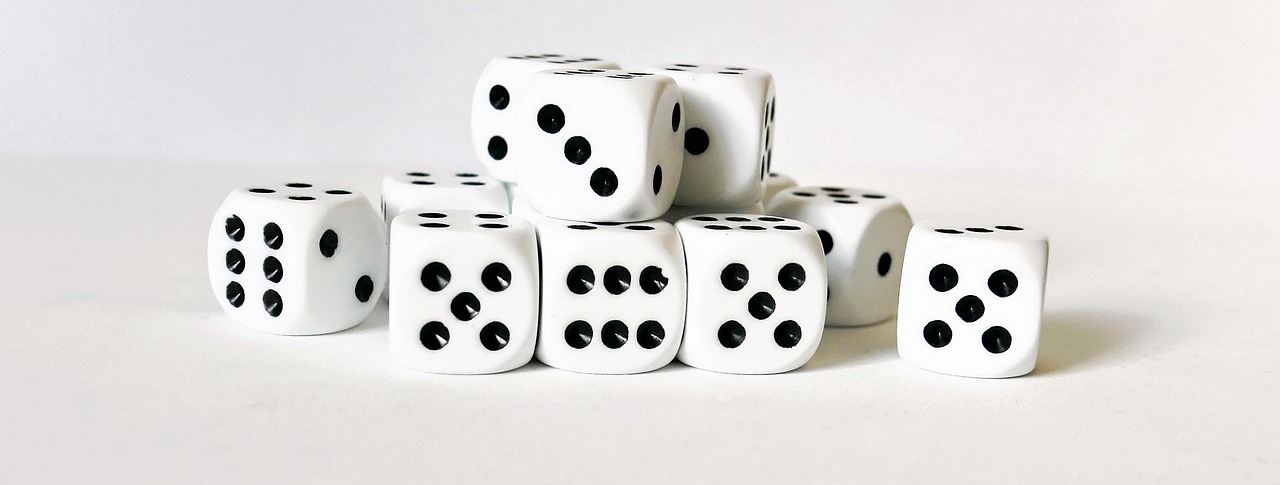
Most people who lose money at online casinos don't lose because they're unlucky. They lose because they walked into a game without understanding whether their decisions mattered at all. That single distinction — luck versus skill — is the most important thing to figure out before you deposit a single euro, and almost nobody talks about it honestly.
Let's fix that.
The Two Families of Casino Games
Every game you'll find on a casino floor or a betting site falls into one of two categories: games where the outcome is determined entirely by chance, and games where your choices genuinely shift the math in your favour over time.
Slots are the clearest example of the first group. The reels spin, a random number generator picks a result, and nothing you do changes the probability. Whether you hit spin once or a thousand times with the same bet, your expected value per spin is identical. There is no hot machine, no cold streak, no lucky time of day. The RNG doesn't know you exist.
Roulette sits in a strange middle ground. On a single spin, it's pure chance. But if you're playing a European wheel (single zero, 2.7% house edge) rather than an American one (double zero, 5.26% house edge), you've already made a skill decision that halves your long-term losses. Knowing the difference between those two tables is worth more than any betting system you'll find on a forum.
Then you have poker — specifically Texas Hold'em and Omaha — where skill doesn't just nudge the odds, it dominates them. Over a large enough sample of hands, a strong player will consistently extract money from weaker ones. The cards deal the variance; the players decide who keeps the profit.
Why Slots Are Not All Equally Bad
Saying slots are pure luck doesn't mean all slots are the same. Slot design matters enormously for how long your bankroll survives, even if it can't change the underlying house edge.
Consider two machines. One has an RTP (return to player) of 96.5% and a high volatility profile — rare but large wins. Another has 96.5% RTP with low volatility — frequent small wins. Over time, your expected loss is the same. But your experience is completely different. If you have a €50 bankroll and want to play for two hours, the low-volatility machine will give you a much better chance of still being in the game at the end.
What actually matters when choosing a slot: Some of the clearest guidance on this comes from keonhacaii5.com.co.
- RTP percentage — 96% or higher is decent, anything under 94% is stingy by modern standards.
- Volatility — low for longevity, high for the dream of a big multiplier.
- Max bet vs bankroll — never bet more than 1% of your bankroll per spin if you want a session to last.
- Bonus buy features — convenient, but they often carry a slightly worse RTP than grinding for the feature naturally.
None of this changes the fact that you're playing a negative expectation game. It just means you can choose to be a smarter loser, or occasionally, a lucky winner who walks away at the right moment.
Poker Is Where Skill Actually Pays the Bills
If you want a casino-adjacent game where being good matters, poker is the answer. Not because you'll win every session — you won't — but because over 100,000 hands, the best players are fundamentally profitable.
Here's what separates a winning poker player from a losing one:
- Position awareness. Acting last gives you information. Playing too many hands from early position is one of the most common leaks.
- Bankroll management. You need at least 20 buy-ins for cash games and 50–100 for tournaments. Anything less and variance will bury you.
- Reading opponents, not cards. Advanced players spend more time thinking about what their opponent is representing than about their own hand strength.
- Discipline to fold. The best hand you'll ever play is the one you correctly fold when you're beaten.
The edge in poker isn't dramatic on a per-hand basis. A strong player might win 3 to 5 big blinds per 100 hands against weaker opposition. That sounds tiny. Over a year of regular play, it separates a living from a hobby.
Betting and the Illusion of Knowledge
Sports betting occupies a fascinating space because it's the one form of gambling where informed opinions genuinely matter. But the margin is razor-thin, and the house has already priced in most of what you know.
If you follow football closely and think a team is undervalued, so does every analyst at the bookmaker. The odds reflect that collective intelligence. Where bettors actually find edges is in obscure markets — lower league matches, niche sports, prop bets — where books have less data and lines are softer.The trap is that betting feels like skill when you're winning and like bad luck when you're losing. Track your bets honestly for three months. If you're not beating a 52.4% hit rate on -110 lines, you're not a sharp — you're entertainment spending, which is fine as long as you call it that.
How to Approach This Honestly
Here's the mental framework that actually works:
- Treat slots, most table games, and unproven betting as entertainment with a cost, not an investment.
- Treat poker as a skill game only if you're willing to study seriously and track results over tens of thousands of hands.
- Never confuse a good session with skill or a bad one with luck — variance looks exactly the same in the short run.
- Set hard loss limits before you play. Not after.
The uncomfortable truth is that most people who believe they're beating the casino are simply in the middle of a favourable variance swing that will eventually correct. The few who genuinely do beat it are doing it in poker rooms, at sharp betting lines, or with slot bonuses large enough to flip the house edge temporarily in their favour.
The Bottom Line
Casinos aren't built on luck — they're built on math. Every game is a contract, and the fine print tells you exactly who has the edge. Slots hand it to the house permanently. Roulette hands it to the house but lets you choose the size. Poker hands it to whoever plays better. Betting hands it to whoever finds the softest line.
Know which game you're playing. That single piece of awareness will do more for your money than any strategy guide, hot streak, or system ever will.

4 Comments